I have always found loan comparisons a little misleading when they focus on the starting rate and leave the rest of the story for later. A lower number can look attractive on a screen, but what matters when comparing borrowing options is whether the payment still makes sense six or twelve months down the road. That matters even more when a loan will sit in the monthly budget for several years.
I also noticed that the “better” rate is not always the better loan. A fixed rate can cost more at the start and still be easier to live with. A variable rate can begin lower and potentially save money, but that advantage comes with uncertainty. The right choice depends less on which rate sounds cheaper and more on how much payment change your budget can handle.
Fixed Rate vs Variable Rate Personal Loans: The Basic Difference
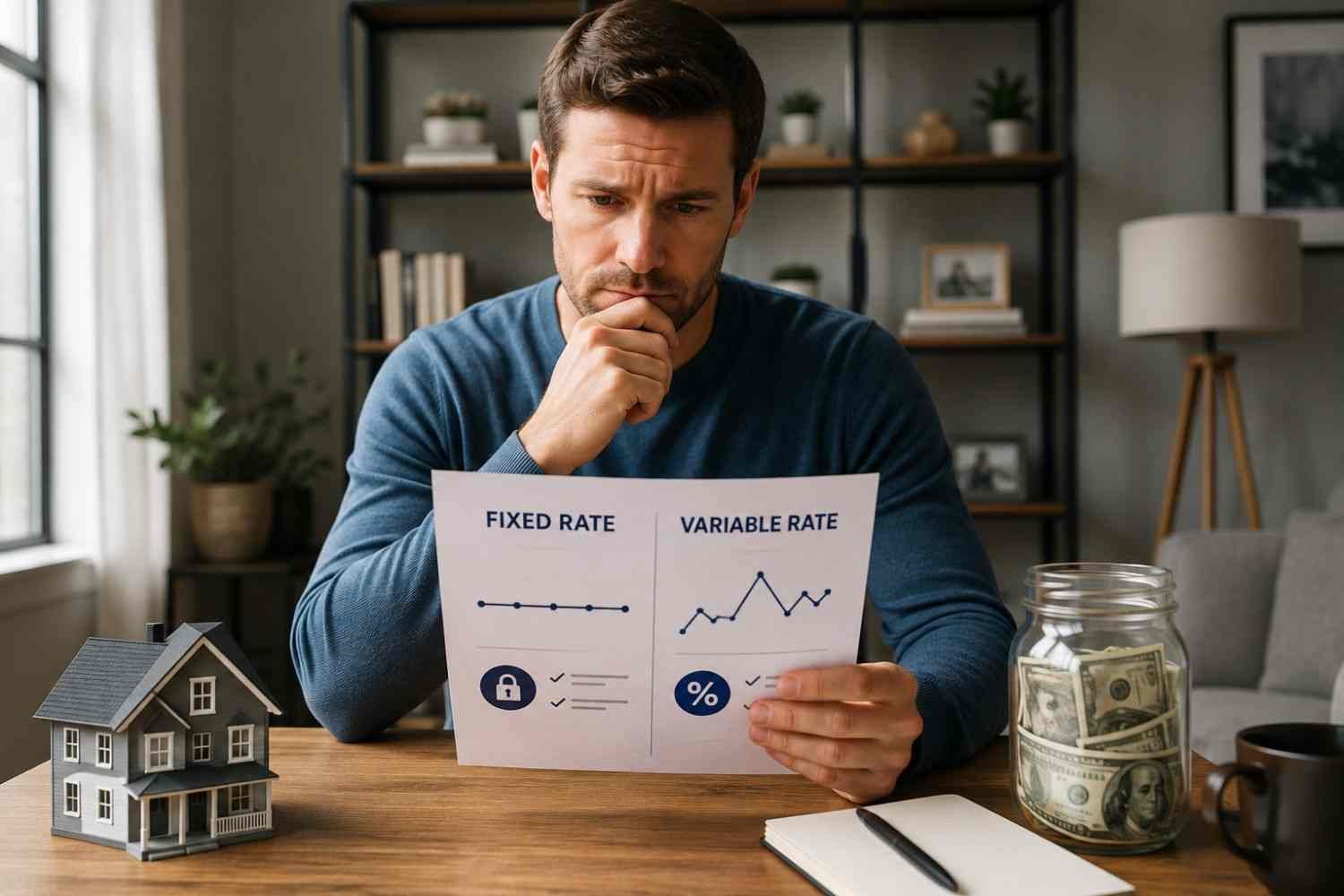
A fixed-rate personal loan keeps the interest rate unchanged for the agreed loan term. Because the rate stays the same, the scheduled principal-and-interest payment is generally predictable.
A variable-rate personal loan can change as its underlying benchmark or index changes. That means the interest rate, and potentially the required payment, can move higher or lower during repayment. The exact adjustment rules depend on the loan agreement. Applicable federal disclosures for variable-rate products can require information about the index, adjustment limits, and how changes may affect the loan.
For many borrowers, the real difference comes down to certainty versus flexibility. Fixed rates reduce the risk of a surprise payment increase. Variable rates give you the possibility of benefiting when rates decline, but you accept the possibility of paying more when they rise.
Why Fixed Rates Can Be Easier to Manage

Predictability is the biggest advantage of a fixed-rate personal loan.
If your payment is $350 each month, you can build that amount into your budget without wondering whether the payment will become $380 or $420 because market rates moved. That can matter when rent, utilities, insurance, groceries, and other expenses already compete for the same paycheck.
A fixed rate also makes the borrowing cost easier to estimate. The trade-off is that fixed loans may start with a higher rate than comparable variable options. If market rates fall later, your loan does not automatically become cheaper.
Most personal installment loans use fixed repayment amounts, although personal loans can have either fixed or adjustable rates.
When a Variable Rate Can Be Attractive
The appeal of a variable rate is usually the starting cost and the possibility of future savings.
If the initial variable rate is below the fixed option, early payments may be lower. If the underlying rate falls, your loan could become less expensive depending on the agreement and how the lender adjusts the rate.
Before choosing one, find out what benchmark controls the rate, how often the rate can adjust, whether there is a margin, and whether caps or other limits apply. Those details tell you much more than the introductory number.
A lower starting rate should never be treated as a guaranteed lower total cost. The future rate path is uncertain, so the borrower takes on more payment risk.
Compare the Whole Loan, Not Just the Rate

A borrower can get distracted by a difference in interest rates and overlook fees that change the real cost. Personal installment loans may include origination fees, documentation fees, late fees, and other charges, depending on the lender and product.
Look at APR, fees, repayment length, monthly payment, and total repayment rather than comparing the advertised interest rate alone. A longer term can lower the monthly payment while increasing the amount of interest paid over time.
If you are comparing several offers, think about what makes an online loan offer competitive beyond its headline rate. A competitive offer should fit your budget, have understandable terms, and make sense based on the total amount you will repay.
Match the Rate Type to Your Budget
Your monthly cash flow should have a major influence on the decision.
A fixed rate may make more sense if your budget is tight, your income is fairly predictable, or you simply do not have much room for a higher payment. The certainty can be worth more than a potentially lower starting rate.
A variable rate may be worth considering when the loan has a shorter expected payoff period, the initial savings are meaningful, and you could still handle a higher payment if rates move against you.
The better question is not “Which rate is cheaper today?” It is “What happens to my budget if this rate moves?”
Consider Why You Need the Loan
The purpose of the loan can change the decision.
Someone borrowing to cover an unexpected expense may value a stable payment because the new debt is already adding pressure to the budget. Someone using a loan to reorganize several balances may focus more heavily on total interest, fees, and the difference between the new payment and the payments being replaced.
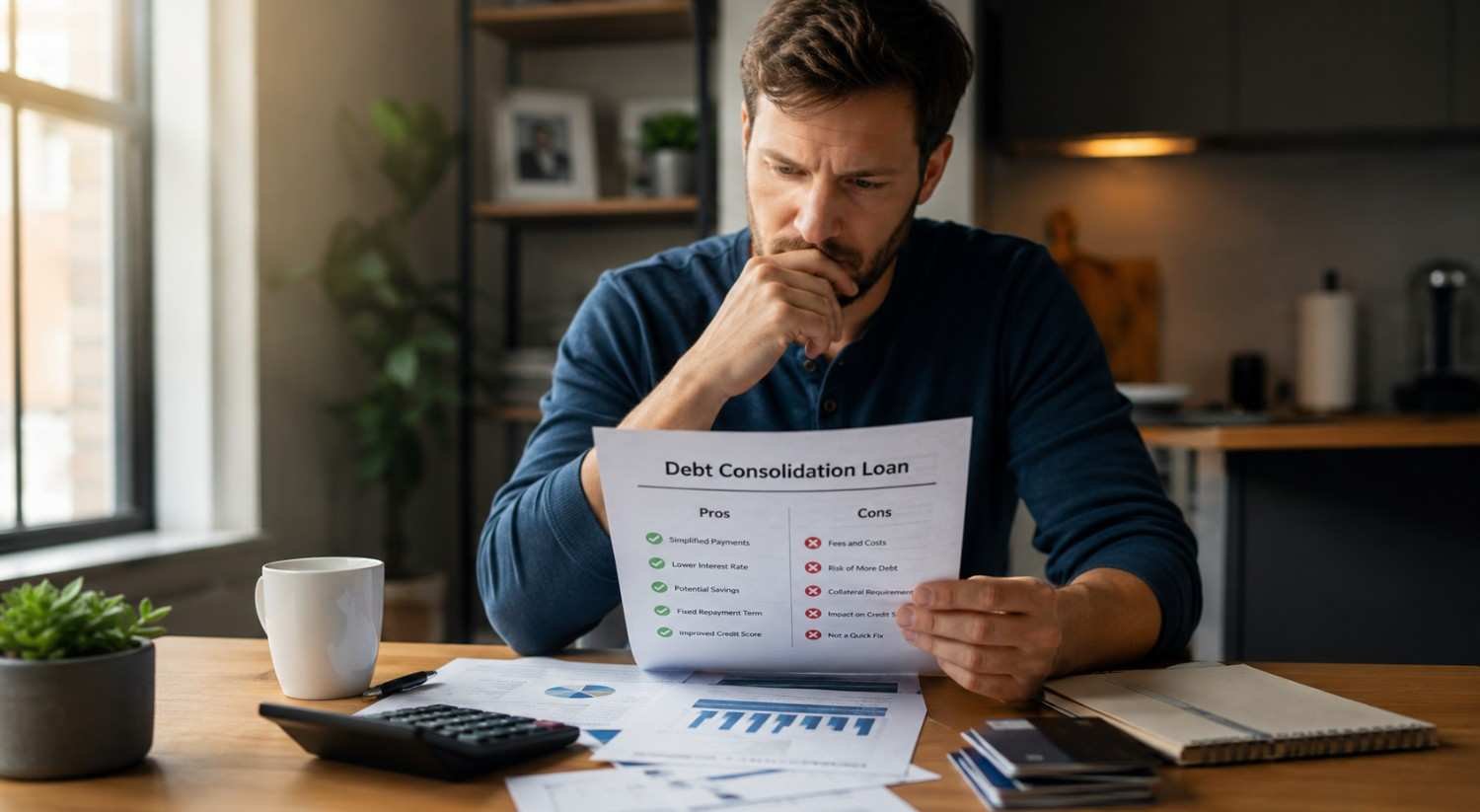
If debt consolidation is the reason for borrowing, look beyond immediate monthly savings. Consider the debt consolidation loan pros and cons, including whether the new loan actually reduces your overall borrowing cost and whether a longer repayment period could keep you in debt for more time.
A lower monthly payment is useful only if the complete arrangement improves your financial position.
Stress-Test a Variable Rate Before Signing

If you are leaning toward a variable-rate loan, do a simple stress test.
Take the expected payment and imagine that the rate rises enough to make the payment noticeably higher. Then ask whether you could still make that payment comfortably while covering your normal expenses.
Do not rely on the assumption that rates will fall before you repay the balance. Nobody can guarantee the direction of market rates. A variable-rate loan should fit your finances even if the outcome is less favorable than you hope.
Also read the agreement carefully. Find the adjustment frequency, benchmark, margin, maximum rate if one exists, and provisions that affect your payment.
Keep Payment History in the Equation
Whichever rate you choose, the loan still needs to fit comfortably enough that you can make payments on time.
A payment that looks affordable at approval can become harder to manage if your expenses rise or income changes. Missing payments can lead to fees and may affect your credit reports and scores, depending on the lender’s reporting practices. The CFPB notes that late payments on personal installment loans can have significant effects on credit reports and scores.
That makes payment stability more than a convenience. If a fixed payment gives your budget more breathing room, that stability may be more valuable than a lower variable rate that could rise.
Understanding how late loan payments affect your finances can also help put the rate decision in perspective. The cheapest loan on paper is not a good deal if its payment leaves you struggling to stay current.
Questions to Ask Before Choosing
Before accepting either option, look beyond the advertised rate.
Ask yourself:
- Can I comfortably afford the payment if it increases?
- What is the APR and total repayment amount?
- Are there upfront or ongoing fees?
- How often can a variable rate change?
- What benchmark determines the change?
- Are there limits on how high the rate can go?
- How long will I realistically keep the loan?
- Does the loan improve the financial situation that prompted me to borrow?
Those questions turn the comparison from simple rate shopping into a decision based on your actual finances.
FAQs: Fixed Rate vs Variable Rate Personal Loans: Which Is Better?
1. Are fixed-rate personal loans better than variable-rate loans?
Not automatically. Fixed rates offer predictable payments, while variable rates may start lower and could become cheaper if rates decline. Your budget and tolerance for payment changes matter more than the label.
2. Can a variable personal loan payment increase?
Yes. If the loan’s benchmark rises, the interest rate and required payment may increase according to the adjustment terms in your agreement.
3. Why can fixed-rate loans have higher starting rates?
You are generally paying for predictability. A fixed rate protects you from future market increases, so the starting rate may be higher than a comparable variable option.
4. Is a variable rate worth considering for a short-term loan?
It can be, particularly when the initial savings are meaningful, and you could handle a higher payment. Check the adjustment rules before deciding.
Choose the Payment You Can Live With
The best personal loan is not necessarily the one with the lowest number beside “interest rate.” It is the one whose cost, payment structure, fees, and repayment terms fit the reality of your finances. A fixed rate can provide dependable payments when certainty matters most. A variable rate can offer an attractive starting point, but you need enough financial flexibility to handle changes.
A good borrowing decision leaves room for real life. Compare the complete offer, test the less comfortable scenario, and choose a rate structure you can manage without relying on everything going perfectly.