

According to data from the Federal Reserve, nearly 14% of Americans overdrafted their checking accounts in recent years, paying billions in preventable fees. Most of those charges stemmed from a simple issue: people misreading their monthly account records. Learning how to read a bank statement isn’t just about reviewing numbers on a page; it is the single most effective way to protect your money, spot unauthorized charges, and kickstart a realistic budget.
When you open that monthly document, you are looking at an exact record of your financial habits. Understanding this document gives you complete control over where your hard-earned money actually goes.
Anatomy of Your Statement: What the AI Overview Doesn’t Tell You
Most basic online summaries break a statement into three parts: personal info, transactions, and fees. While accurate, that surface-level view misses how those sections interact to impact your real-time balance.
| Section | What It Includes |
| 1. Account Header | Name, Address, Account Number, Statement Period |
| 2. Summary Box | Starting Balance + Deposits – Debits – Fees = Ending Balance |
| 3. Transaction Ledger | Date, Description, Debits/Credits, Running Balance |
| 4. Fee & Interest Details | Monthly Maintenance Fees, Overdraft Fees, APY Earned |

Here is a deeper look at the core components:
- The Header and Statement Period: This contains your account number, personal details, and the precise date range covered (often 28 to 31 days, which rarely aligns perfectly with the first and last day of a calendar month).
- The Account Summary: This box acts as the math equation for your month:
- StartingBalance+Deposits-Withdrawals/Fees=EndingBalance
- Transaction History: A line-by-line ledger showing the posting date, a short vendor description, the dollar amount, and your running balance.
- Fee and Interest Schedule: A dedicated area detailing service charges, ATM surcharges, and any interest earned if you hold an interest-bearing account.
Understanding the difference between your posted balance and your available balance is crucial. Your bank statement shows posted transactions—purchases that have fully cleared. It won’t show pending transactions, such as a tip added at a restaurant that hasn’t processed yet.
Why Checking Your Statement Matters for Your Wallet
Skipping your monthly review leaves you vulnerable to hidden leaks. The Consumer Financial Protection Bureau (CFPB) notes that consumers lose millions annually to recurring subscriptions they forgot they canceled and incorrect billing amounts.
If a fraudster charges $4.99 to your card as a test, you might never notice it on your mobile app’s rapid feed. On a standardized monthly statement, that line item stands out. Under federal law, you typically have 60 days from the date your statement is sent to report unauthorized electronic transfers and limit your liability.
Regular statement audits are also foundational for building smart money habits. When you see your total dining out or impulse shopping totals added up in one place, it removes the guesswork from tracking your daily expenses.
The 5-Minute Monthly Bank Statement Audit Checklist
You don’t need hours to analyze your finances. Follow this quick step-by-step checklist once a month to keep your account secure and your budget on track:

- Verify the Date Range: Ensure you aren’t confusing last month’s statement with the current cycle.
- Match the Starting Balance: Confirm that the starting balance matches the ending balance from your previous statement.
- Scan for Unknown Merchants: Read down the description column. Look for unfamiliar company names, double charges, or unfamiliar locations.
- Tally Up the Fees: Highlight every bank fee, overdraft charge, or foreign transaction fee. Call your bank to negotiate waiving one-time fee occurrences.
- Reconcile Uncleared Items: Compare your statement ending balance against your active budgeting app or checkbook register to account for outstanding checks or pending debit charges.
How to Analyze Your Statement to Boost Your Savings
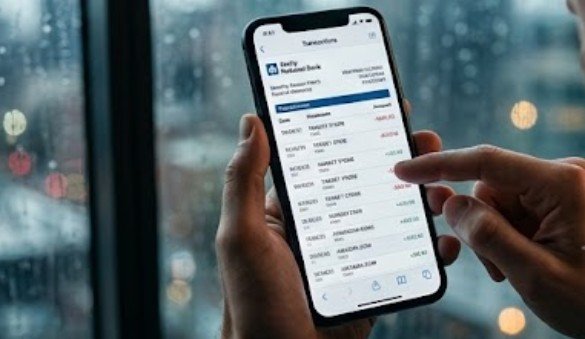
Reading your statement is reactive; analyzing it is proactive. To turn your statement into a savings engine, categorize every debit transaction into three distinct buckets: Fixed Essentials (rent, utilities, insurance), Variable Needs (groceries, gas), and Discretionary Wants (dining out, streaming services, hobbies).
If you find that discretionary choices consume more than 20% to 30% of your take-home pay, it is time to adjust. Learning how to manage money without sacrificing lifestyle starts by identifying low-value spending—like unused gym memberships or daily delivery fees—and redirecting those funds toward an emergency fund or high-yield savings account.
If you are working with a tight budget, reading your statement helps you spot cash flow bottlenecks. You can easily see if major bills land right before payday, allowing you to request shifted due dates from providers to avoid accidental overdrafts. This strategy is essential when learning how to prioritize spending with limited income.
Common Misconceptions and Limitations
While bank statements are powerful financial tools, they have distinct limitations you should keep in mind:
| Feature / Aspect | What the Statement Shows | What it Does NOT Show |
| Transaction Details | Overall merchant name & total cash amount spent | Specific store items purchased (e.g., groceries vs. gift cards) |
| Real-Time Data | Historical, fully processed transactions | Pending charges, authorized holds, or uncleared checks |
| Account Standing | Past account history and fees incurred | Pending credit score updates or external credit line changes |
Additionally, a negative sign (–) or minus mark next to a figure confusingly causes misunderstandings. On a bank statement, a minus sign simply represents a debit—money leaving your account. It does not automatically mean your balance is below zero, unless that minus sign appears next to your final ending balance line.
Frequently Asked Questions
1. How do I understand my bank statement?
Read it in three parts: check your starting and ending balances at the top, review line-by-line debits and credits in the middle, and review total bank fees or interest earned at the bottom.
2. How do I analyze a bank statement?
Group your transactions into categories like essentials, subscriptions, and discretionary spending. Compare total deposits against total withdrawals to calculate your monthly net savings rate and spot unnecessary expenses.
3. What does minus mean on a bank statement?
A minus sign indicates a debit, meaning money was removed from your account. This includes debit card purchases, bill payments, cash withdrawals, or bank service fees.
4. Do bank statements show exactly what you bought?
No. Bank statements show the merchant name, date, and total dollar amount spent. They do not list itemized receipts or specific products purchased inside the store.
Taking Control of Your Financial Future
Mastering how to read a bank statement is a fundamental financial skill that pays dividends for the rest of your life. What seems like a confusing grid of dates, codes, and numbers is actually a clear, actionable story of your financial health.
By spending just five minutes each month auditing your summary, scanning for errors, and reviewing your real spending patterns, you protect your money from hidden fees and billing mistakes. Take a moment today to log into your online portal, download your latest PDF statement, and run through the audit checklist—your future savings will thank you.