

According to the American Payroll Association, nearly 78% of American workers live paycheck to paycheck, yet millions never actually check the detailed breakdown attached to their direct deposit. Learning how to read your pay stub is the single fastest way to spot hidden billing errors, protect your hard-earned income, and build a realistic budget from scratch.
When you first enter the workforce, seeing a massive chunk vanished from your earnings can feel like an outright heist. But every line item on that document tells a specific story about where your money is going—and how much of it is actually yours to keep.
Decoding the AI Overview: Key Paycheck Building Blocks
Understanding your earnings statement requires recognizing its core components. While digital portals vary, every legitimate payroll document divides your financial picture into distinct categories.
| Section | What It Tracks | Why It Matters |
| Header Data | Pay period dates, employer EIN, check number | Establishes the legal timeframe for your earnings |
| Gross Pay | Hours worked multiplied by hourly rate (or salary division) | The baseline figure before any deductions are subtracted |
| Pre-Tax Deductions | 401(k), HSA, health insurance | Reduces your overall taxable income threshold |
| Statutory Taxes | Federal income, State income, FICA (Social Security & Medicare) | Non-negotiable government obligations |
| Post-Tax Deductions | Roth 401(k), wage garnishments, union dues | Taken out after taxes are calculated |
| Net Pay | The final figure deposited into your account | Your actual spendable income for budgeting |
Every column on your document usually features two distinct metrics: Current (what you earned during this specific pay period) and YTD (Year-To-Date, tracking cumulative totals since January 1st). Tracking your YTD numbers helps ensure your tax withholdings align with your annual goals.
The Hidden Mechanics of Withholdings: Where Does the Money Go?
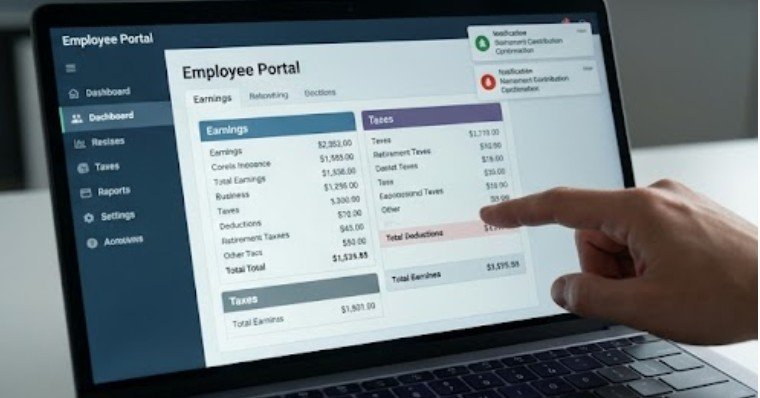
When you look at the gap between gross and net pay, taxes make up the largest chunk. Under the Federal Insurance Contributions Act, the tax rate for Social Security is 6.2% and Medicare is 1.45% for employees, totaling 7.65% in mandatory FICA taxes. Your employer matches this exact amount behind the scenes.
Federal and state income taxes operate on a progressive scale based on the elections you submitted on your Form W-4. If you notice your federal tax line looking surprisingly high or low, your tax bracket or allowances may need adjusting. You can use official IRS tools or consult resources on financial planning for individuals to ensure your withholdings align with your year-end tax strategy.
Beyond taxes, pre-tax deductions offer a hidden financial superpower. When money flows directly into a traditional 401(k) or Health Savings Account (HSA), it lowers your taxable income baseline. For instance, if you earn $1,500 gross and contribute $100 pre-tax to a retirement account, Uncle Sam only taxes you on $1,400.
Why Paycheck Literacy Matters for Your Wallet

Ignoring your pay stub is like driving with your eyes closed—you won’t know something is wrong until you hit a bump. Payroll departments rely on human input and automated software, both of which can fail. Common mistakes include incorrect hourly wages after a raise, missing overtime multipliers, or unintended tax withholding status changes.
Furthermore, accurate take-home numbers are essential for practical money management. Basing a monthly budget on gross salary leads to overspending and dangerous shortfalls. Knowing your exact net income allows you to establish realistic spending limits, pay down debt methodically, and learn how to manage money effectively.
Having a precise view of your disposable income is also the foundation for handling life’s surprises. Once you know your exact take-home pay, you can calculate how to build an emergency fund on low income by automating small savings contributions straight from your net pay into a high-yield account.
The 4-Step Pay Stub Audit Checklist
Run through this quick audit every time you receive a new statement to ensure every cent is accounted for properly:
- Verify Total Hours Worked: Cross-reference the hours listed under the “Current” column against your personal shift calendar, ensuring regular and overtime hours are separated accurately.
- Confirm Your Pay Rate: Double-check that your base hourly rate or salaried division reflects your current employment contract and any recent promotions.
- Audit Your Tax Withholdings: Check your federal and state tax deductions against your filing status to prevent unexpected tax bills at the end of the year.
- Review Voluntary Deductions: Ensure retirement contributions, health insurance premiums, and flexible spending accounts reflect the exact percentage or dollar amount you selected during enrollment.
Paycheck Misconceptions and Edge Cases
A frequent misunderstanding involves working overtime and “moving into a higher tax bracket.” Many workers worry that extra hourly pay will reduce their overall income due to higher taxation. However, US taxes are marginal: higher tax rates apply only to the earnings that cross the specific income threshold, never to your entire paycheck.

Exceptions to standard pay stubs exist across various industries:
- Tipped Employees: Federal law permits a “tip credit,” allowing employers to pay a direct wage below minimum wage provided total tips bring earnings up to the legal floor under the Fair Labor Standards Act.
- Independent Contractors (1099): Freelancers do not receive traditional pay stubs with tax withholdings. They receive total gross payments and must calculate set-asides for self-employment taxes independently.
- Commission-Based Roles: Variable sales payouts often result in fluctuating tax withholding percentages per pay period based on automated payroll algorithms.
Frequently Asked Questions
1. What does a 401k look like on a paystub?
It typically appears under deductions as “401k,” “Retirement,” or “Pre-Tax Def.” It shows the dollar amount subtracted from your current period’s pay alongside your cumulative year-to-date total.
2. How do I check if my paystub is correct?
Multiply your hourly rate by total hours worked to verify gross earnings. Then confirm pre-tax benefits, taxes, and voluntary deductions match your W-4 selections and official benefit election documents.
3. How do I understand my paycheck?
Start with your gross pay, subtract pre-tax deductions and mandatory federal, state, and FICA taxes, then account for post-tax deductions. The remaining balance equals your net take-home pay.
4. How should my pay stub look?
It should feature an organized layout displaying employer/employee information, clear pay period dates, itemized gross earnings, broken-down tax withholdings, itemized deductions, and a clearly labeled net pay balance.
Understanding how to read your pay stub transforms a routine document into a powerful personal finance tool. By regularly auditing your earnings statement, confirming tax withholdings, and tracking pre-tax opportunities, you protect your hard-earned cash from administrative errors. That paper or digital document is the blueprint of your daily labor; knowing how to read it gives you total control over your financial journey. Keep auditing your numbers, make informed decisions about your withholdings, and use your actual net income to build a secure financial future.