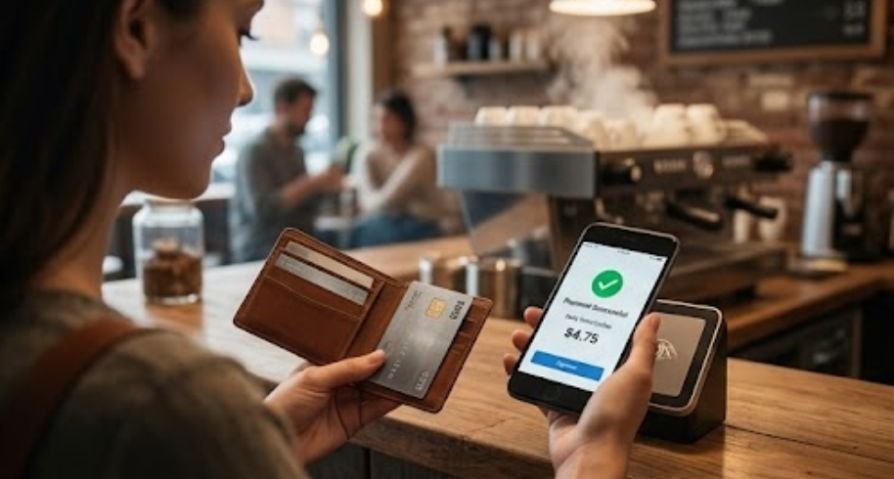

A reckless purchase can take 20 seconds; the financial cleanup can last for months. That mismatch is the real problem. If you are learning how to stop spending money recklessly, start by slowing the distance between urge and checkout. Removing saved cards, delaying nonessential purchases, and checking your available spending money before buying can work better than promising yourself to “be more disciplined.”
The goal is not to stop enjoying money. It is to make your spending match what you actually care about.
Reckless Spending Often Starts Before Checkout
Overspending can look irrational afterward because the purchase solved a short-term problem: boredom, stress, excitement, social pressure, or the desire for a quick reward.
A longitudinal study available through the National Institutes of Health found associations between adult compulsive buying and earlier impulse buying, depressive mood, and concurrent ADHD symptoms. That does not mean every impulse purchase is a disorder; it means repeated spending can have emotional triggers worth noticing.
Run a seven-day “trigger log.” For every unplanned purchase, note what you bought, how you felt, and what happened just before the urge. Your real danger zone may be late-night scrolling, payday optimism, stressful workdays, or social outings.
Why a Budget Alone May Not Work
A monthly budget helps, but it can be far removed from the moment you tap “Buy Now.” CFPB research found that consumers often intend to follow budgets yet do not consistently use them during real-time spending decisions. More than 90% of participants expressed interest in tools showing spending feedback at the point of purchase.
That is why learning how to manage money works better when your plan is visible during the day, not hidden in a spreadsheet.
Try one number: after bills, savings, debt payments, and essentials are covered, divide your remaining discretionary money by the days until your next paycheck. That gives you a rough daily spending ceiling. CFPB consumer research on managing spending.
Put Friction Between the Urge and Your Money
The fastest practical fix is making buying slightly inconvenient.

Remove One-Click Spending
Delete saved credit cards from retail sites, remove shopping apps, unsubscribe from promotional emails, and turn off retailer notifications. If social-media ads trigger shopping sessions, unfollow brands or creators that repeatedly push you toward checkout.
Use a 24-Hour Rule
For nonessential purchases, wait one full day. For expensive purchases, wait 72 hours or a week.
Ask: Would I still buy this at full price? What will I give up this month to pay for it? Do I already own something that solves the same problem?
Change Payment Methods When Necessary
If credit makes spending feel invisible, temporarily use cash or a debit card for categories such as dining, clothing, or entertainment.
Credit cards can still provide useful consumer protections and rewards when paid in full. The issue is financing purchases your cash flow cannot support.
The American Psychological Association has warned that buy-now-pay-later products can remove cognitive and physical barriers that normally slow purchasing, potentially increasing financial stress. American Psychological Association overview of BNPL risks
The 30-Day Reckless-Spending Reset

Use this four-step process:
- Track: Record every purchase for one week without judging it.
- Block: Remove your two biggest triggers, such as shopping apps and saved cards.
- Delay: Apply the 24-hour rule to every nonessential purchase.
- Redirect: Move money from skipped purchases into a named goal immediately.
The last step turns restraint into progress. If you nearly spend $45 on clothes and decide against it, transfer some or all of that $45 to savings instead.
You can reinforce the habit with smart money habits such as automatic transfers and separate savings buckets.
Is It Reckless Spending or Just Enjoying Your Money?
Not every spontaneous purchase is a mistake. Judge spending by consequences, not guilt.
| Test | Warning sign |
| Borrowing | You carry credit-card debt or stack BNPL payments |
| Essentials | Rent, food, utilities, or required payments get squeezed |
| Secrecy | You hide purchases from a partner or avoid checking accounts |
| Repetition | The same behavior continues after fees, debt, or regret |
The distinction matters. The Federal Reserve reported in 2026 that 63% of U.S. adults said they could cover a hypothetical $400 emergency with cash or its equivalent, while 12% said they could not cover it by any means.
Building even a modest emergency fund gives impulse spending a visible competitor: financial breathing room.
When Budgeting Is Not Enough
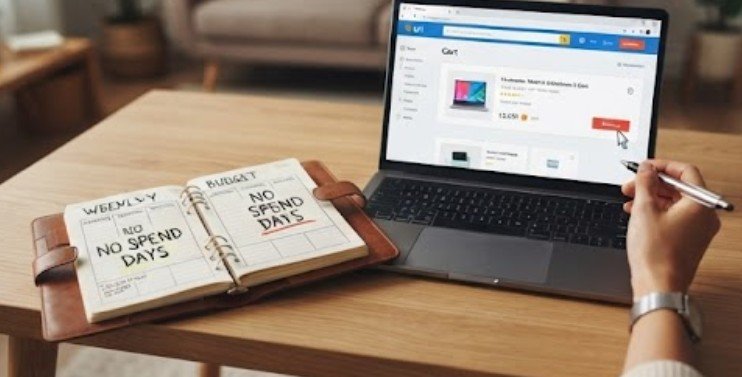
If spending feels uncontrollable, repeatedly causes debt, creates secrecy, or becomes your main way to handle difficult emotions, another budgeting template may not fix it.
Research on compulsive buying identifies persistent urges, diminished control, unnecessary purchasing, and continued buying despite negative consequences as important warning features.
Consider talking with a qualified mental-health professional and, if debt is involved, a reputable nonprofit credit counselor. The point is not to label yourself; it is to match the solution to the seriousness of the pattern.
Frequently Asked Questions
1. How to stop compulsive spending money?
Identify triggers, remove easy shopping access, delay purchases, limit discretionary funds, and track transactions. If spending remains uncontrollable or causes serious debt or distress, seek professional mental-health or nonprofit credit-counseling support.
2. What is the $27.40 rule?
It means saving about $27.40 per day. Over 365 days, that totals roughly $10,000. It is a savings challenge, not a requirement, so scale it to your income.
3. Why do I recklessly spend money?
Common drivers include stress, boredom, social pressure, convenience, emotional reward, and impulsivity. Track what happens immediately before each unplanned purchase to find your own pattern.
4. Can you live off $1000 a month after bills?
Possibly, if major fixed bills are already paid and food, transportation, health, and personal costs remain under $1,000. Compare the target with your last 30 days of actual spending.
Final Takeaway
Learning how to stop spending money recklessly is not about making every purchase a moral test. It is about redesigning the moments where money tends to escape unnoticed. Slow the purchase, expose the trigger, make available spending visible, and redirect skipped purchases toward something you value.
Start with one week of tracking rather than a punishing no-spend month. If the pattern still damages your finances despite those barriers, treat it as a real behavioral problem and get appropriate support. The strongest spending system is one that works on a stressful Friday night, not only on payday morning when temptation hits.