
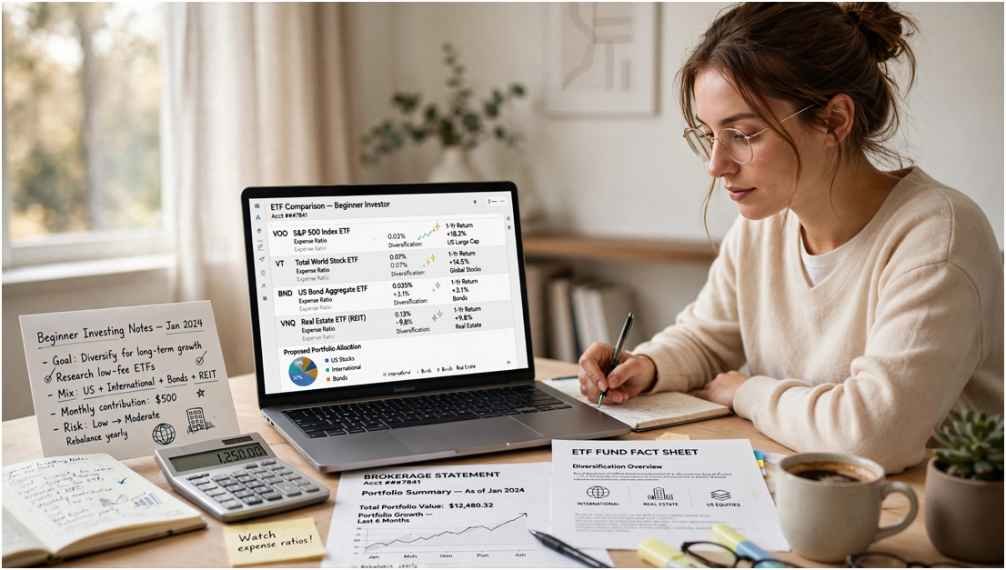
The hardest part of ETF investing is not placing the trade. It is filtering thousands of funds that often look alike. When I evaluate how to choose an ETF for beginners, I start with one rule: the ETF must solve a portfolio need before I compare performance.
That keeps recent returns from driving the decision. For a first fund, I usually favor broad, low-cost index exposure over a narrow theme or complex strategy.
Start With the Job the ETF Must Do
An ETF can hold stocks, bonds, short-term instruments, or combinations of assets. Investor.gov explains that ETF shares trade throughout the day at market prices, which can differ from their net asset value.
For long-term growth, I may screen broad U.S. stock ETFs. If U.S. stocks already dominate the portfolio, international equities may fill a real gap. Bonds may suit money where stability matters more than maximum growth.
When deciding how to choose an ETF for beginners, I would not begin with leveraged, inverse, single-stock, or very narrow sector funds. FINRA notes that some exchange-traded products are designed for tactical or specialized exposure and can involve different risks.
Prefer Broad Diversification Before Clever Themes
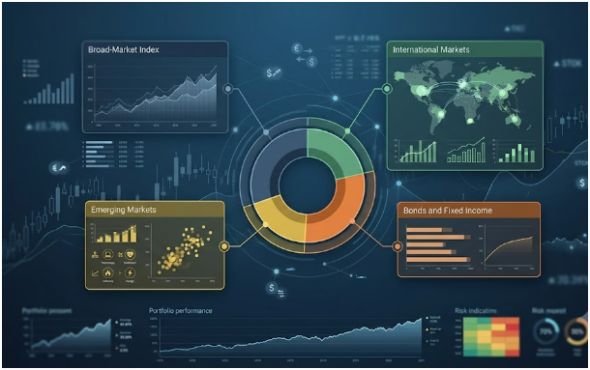
Broad indexes can spread an investment across hundreds or thousands of companies. Vanguard Total Stock Market ETF (VTI), for example, held 3,531 stocks as of June 30, 2026. Its expense ratio was 0.03%.
That is why one broad fund may provide better diversification than several narrow ETFs.
If I already own several funds, I check how much ETF overlap is too much before adding another. More ticker symbols do not automatically create more diversification.
Compare ETF Expense Ratios and True Costs

The expense ratio represents a fund’s annual operating expenses. Investor.gov warns that even small differences in fees can cause meaningful differences in long-term returns.
I use cost as a comparison tool rather than the entire decision. If two ETFs provide nearly identical exposure, I generally prefer the cheaper option. A cheap ETF that tracks the wrong market, however, is still a poor fit.
My $10,000 test makes the difference easier to see. If $10,000 remained invested for a year, a 0.03% expense ratio represents roughly $3 in fund expenses. A 0.50% expense ratio represents about $50.
Cost control matters when learning how to choose an ETF for beginners because fees are one variable I can evaluate before investing.
Check ETF Liquidity, Spreads, and Fund Size
Because ETFs trade like stocks, I look beyond the expense ratio. The bid-ask spread is the gap between available buying and selling prices. Wider spreads can increase the effective cost of trading.
I examine trading activity, fund assets, age, and spreads together. FINRA explains that ETF liquidity involves both exchange trading and the creation-redemption mechanism used by authorized participants.
I often favor established funds with meaningful assets, but I would not treat “$1 billion in AUM” as a universal pass-or-fail rule. When assessing how to choose an ETF for beginners, several liquidity indicators tell me more than one arbitrary threshold.
Check the Index and Holdings, Not Just the Name
Two ETFs with similar names may own different securities.
Before investing, I check the benchmark, major holdings, sector weights, market-cap exposure, and geographic allocation. A large-cap U.S. ETF, for example, is different from a total-market ETF containing large-, mid-, and small-cap stocks.
I also compare tracking results when two funds follow the same benchmark. Persistent differences can result from expenses, portfolio construction, trading costs, and other implementation factors.
The SEC recommends reviewing an ETF’s prospectus, NAV, market price, holdings, premiums or discounts, and median bid-ask spread. That becomes essential homework for how to choose an ETF for beginners.
Avoid ETF Overlap Before Adding More Funds

One mistake I try to avoid is collecting ETFs instead of designing an allocation.
A total-market fund can already contain many of the same large companies held by an S&P 500 ETF. Adding both may increase complexity without adding as much diversification as expected.
Before buying another ETF, I ask one question: “What exposure does this fund add?”
That is also why how many ETFs I should own in my portfolio has no universal numerical answer. One to a few broad ETFs may cover several major asset classes. Each additional fund should have a distinct purpose.
Overlap analysis deserves a place in how to choose an ETF for beginners because diversification depends on underlying holdings, not the number of funds displayed in an account.
Consider Taxes and Account Type
For U.S. investors, the account holding an ETF can affect its tax impact. Dividends, capital gain distributions, and realized gains in taxable brokerage accounts may create tax obligations.
The IRS states that regulated investment companies, including ETFs, can distribute capital gains. Investor.gov also explains that ETFs often generate fewer capital gain distributions than comparable mutual funds because many ETFs use in-kind transactions.
I therefore check turnover and distribution history. I also considerto avoid taxes when rebalancing a portfolio before selling appreciated holdings only to restore an allocation.
Taxes should not override diversification, but they belong in any serious framework for how to choose an ETF for beginners.
Quick ETF Selection Table
| Check | What I Look For | Why It Matters |
| Objective | Clear portfolio purpose | Prevents random fund collecting |
| Holdings | Broad, understandable exposure | Limits concentration |
| Expense ratio | Competitive versus peers | Reduces ongoing costs |
| Liquidity | Reasonable activity and spreads | Reduces trading friction |
| Tracking | Consistent benchmark results | Tests fund implementation |
| Taxes | Suitable account and distributions | Reduces avoidable tax drag |
My Three-Filter Rule Before I Buy
My simplest framework for how to choose an ETF for beginners uses three filters.
First, does the ETF provide exposure the portfolio actually needs? Second, are its costs and trading characteristics competitive with similar funds? Third, can I explain what it owns and why I own it in one sentence?
If a fund fails one test, I keep looking.
VTI provides a useful example of broad U.S. exposure and carried a 0.03% expense ratio as of April 28, 2026. IXUS targets large-, mid-, and small-cap stocks outside the U.S., including developed and emerging markets, and currently lists a 0.07% expense ratio.
Those ETFs serve different geographic jobs. Combining funds with distinct roles can add meaningful diversification instead of merely duplicating holdings.
Don’t Build a Ticker Collection
A beginner portfolio does not need to look complicated to be thoughtfully constructed. I would rather select one understandable, diversified ETF than stack several funds because their recent charts look exciting.
My next move is simple: define the exposure I need, shortlist two or three ETFs that provide it, then compare holdings, fees, spreads, tracking, and taxes side by side.
That turns how to choose an ETF for beginners from a prediction contest into a repeatable decision process.
Frequently Asked Questions
1. What type of ETF is best for a beginner?
A broad-market, low-cost index ETF is often a simple starting point because one fund can provide substantial diversification.
2. Is one ETF enough for a beginner portfolio?
It can be if the ETF is broadly diversified, although international stocks or bonds may improve allocation for some investors.
3. How do I compare two similar ETFs?
Compare their benchmark, holdings, expense ratio, bid-ask spread, tracking results, fund size, and tax characteristics.
4. How to choose an ETF for beginners with little money?
Look for a diversified, low-cost ETF available through fractional shares, then invest consistently rather than waiting for a large lump sum.