I’ve found that the most tempting part of a loan offer is usually the number that gets your attention first. A lender may show a manageable monthly payment or an attractive interest rate, and it is easy to start thinking about what the money could help you accomplish. But once you look past that headline number, the offer can tell a very different story.
I also think the best time to ask uncomfortable questions is before signing, not after the first payment is due. A few minutes spent checking the APR, total repayment amount, fees, payment schedule, and early-payoff rules can reveal costs that are easy to overlook. A loan should fit your budget on paper and in real life, not just look affordable at first glance.
What Will This Loan Actually Cost?
Start with the complete cost rather than the advertised interest rate. Ask the lender for the APR and have them explain exactly what is included in it.
The interest rate tells you the cost of borrowing the principal, while the APR can incorporate certain mandatory fees and gives you a broader measure of the borrowing cost. That makes it especially useful when you are comparing different offers.
Then ask for the total amount you are expected to repay. A loan with a low monthly payment can still cost substantially more if the repayment period is long.
It is also worth asking how much money you will actually receive. If an origination fee comes out of the loan proceeds, a $10,000 loan may not put the full $10,000 in your account.
Understanding how to compare loan offers beyond interest rates can help you look at the complete financial picture instead of choosing whichever lender displays the lowest rate.
What Is My Exact Monthly Payment?

Do not settle for an estimated payment. Ask for the exact amount due, when the first payment will be due, and how frequently payments are required.
Then compare that payment with your real monthly budget. Leave room for rent or mortgage payments, utilities, food, transportation, savings, and other existing debts. A payment that technically fits may still leave too little flexibility for an unexpected expense.
Ask whether the payment could change during the loan. A fixed-rate loan generally keeps the interest rate stable, while a variable-rate loan can change based on its terms. If the rate can move, ask what could cause it to change and whether your payment could increase.
You should also ask whether automatic payments are required or simply available as an option. Some lenders may offer a rate discount for autopay, but the discount should be weighed against the full cost of the loan rather than treated as a reason to accept an otherwise unfavorable offer.
How Long Will I Be Paying It Back?
The loan term can make a major difference to your overall cost.
A longer term usually spreads payments across more months, which can make the monthly amount easier to manage. But keeping the balance outstanding longer can also mean paying more interest over time. A shorter term may increase the monthly payment while reducing the total interest paid.
Before signing, ask the lender to show you the total repayment amount under the offered term. If there are alternative terms available, ask how the payment and total cost would change with each one.
This is where understanding how loan terms affect your total borrowing cost becomes useful. Looking only at the monthly payment can hide the financial tradeoff between affordability today and the amount you ultimately repay.
What Fees Will I Pay?
Ask for a complete list of fees before accepting the offer.
That should include any origination, application, processing, documentation, or other charges connected to obtaining the loan. Do not assume a fee is insignificant just because it appears as a small line item.
Ask whether each fee is paid upfront, deducted from the loan proceeds, or added to what you owe. The difference matters. A fee deducted from the proceeds reduces the cash you actually receive, while a fee added to the balance can increase the amount you repay.
You can also ask whether there are optional products or services attached to the loan. If something is presented as part of the offer, make sure you understand whether it is required and what it costs.
Is There a Penalty for Paying the Loan Off Early?

If your finances improve, you may want to pay the loan off sooner. Ask whether the lender charges a prepayment penalty for doing so.
Even when there is no penalty, ask how extra payments are applied. Some borrowers assume additional money automatically reduces principal, but the lender’s payment rules determine how extra amounts are handled.
Also ask what happens if you miss a payment. Find out the late fee, when it is charged, whether there is a grace period, and what other consequences may follow.
Knowing these rules before signing gives you a clearer picture of the financial obligations you are accepting.
What Happens If I Miss a Payment?
A missed payment can cost more than a single late fee. Depending on the loan and lender, it can affect your account status, trigger additional charges, or potentially affect your credit history.
Ask the lender to explain exactly what happens after a payment becomes late. If you expect your income to vary, ask whether the lender offers any hardship options or payment arrangements and what conditions apply.
Do not rely on a verbal promise. If a specific protection or fee waiver matters to you, look for it in the written loan agreement.
Does the Written Offer Match What I Was Promised?
Before signing, compare the final paperwork with the offer you originally reviewed.
Check the loan amount, APR, interest rate, term, monthly payment, fees, and total repayment amount. Make sure the amount you receive matches what you expect after any fees are deducted.
Take your time with the agreement. If a term is unclear, ask the lender to explain it in plain language. A confusing clause should be a reason to pause, not a reason to sign quickly.
This is also where loan comparison mistakes borrowers should avoid become especially relevant. A borrower can carefully compare two offers at the beginning and still make a poor choice if the final agreement contains terms they never fully reviewed.
Are There Any Warning Signs?
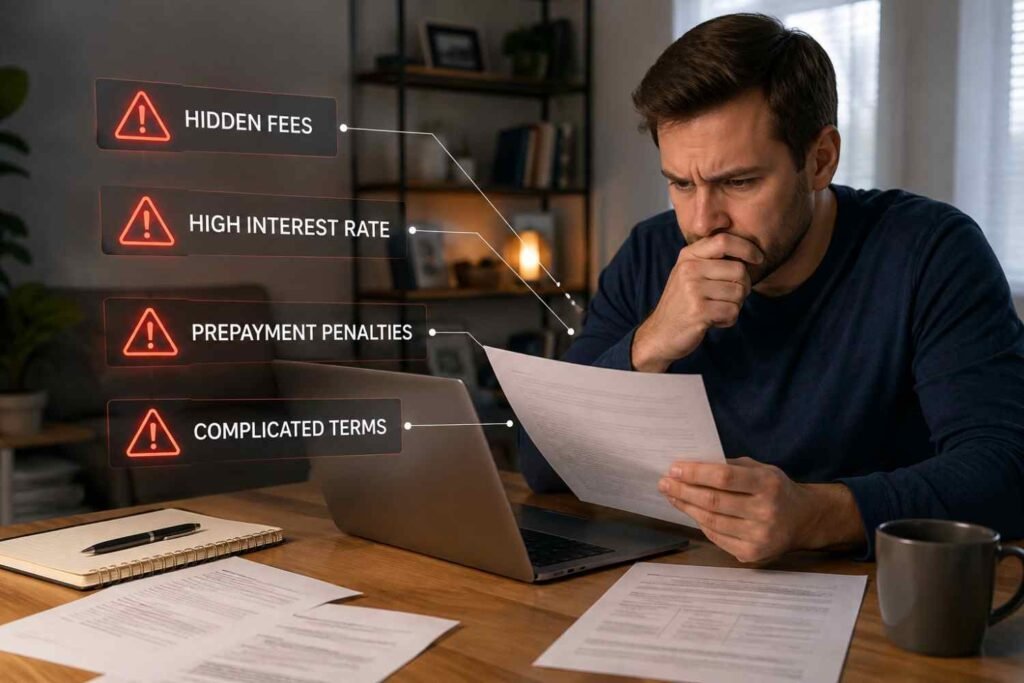
Be cautious if someone pressures you to sign immediately or refuses to explain the cost of the loan.
Another warning sign is a lender asking you to pay money upfront in exchange for a promise that you will receive a loan. The Federal Trade Commission warns consumers about advance-fee loan scams, where people are asked to pay before receiving promised financing.
A legitimate offer should give you enough information to understand what you are agreeing to. You should know the cost, payment obligations, fees, and major conditions before committing.
The Questions Worth Asking Before You Sign
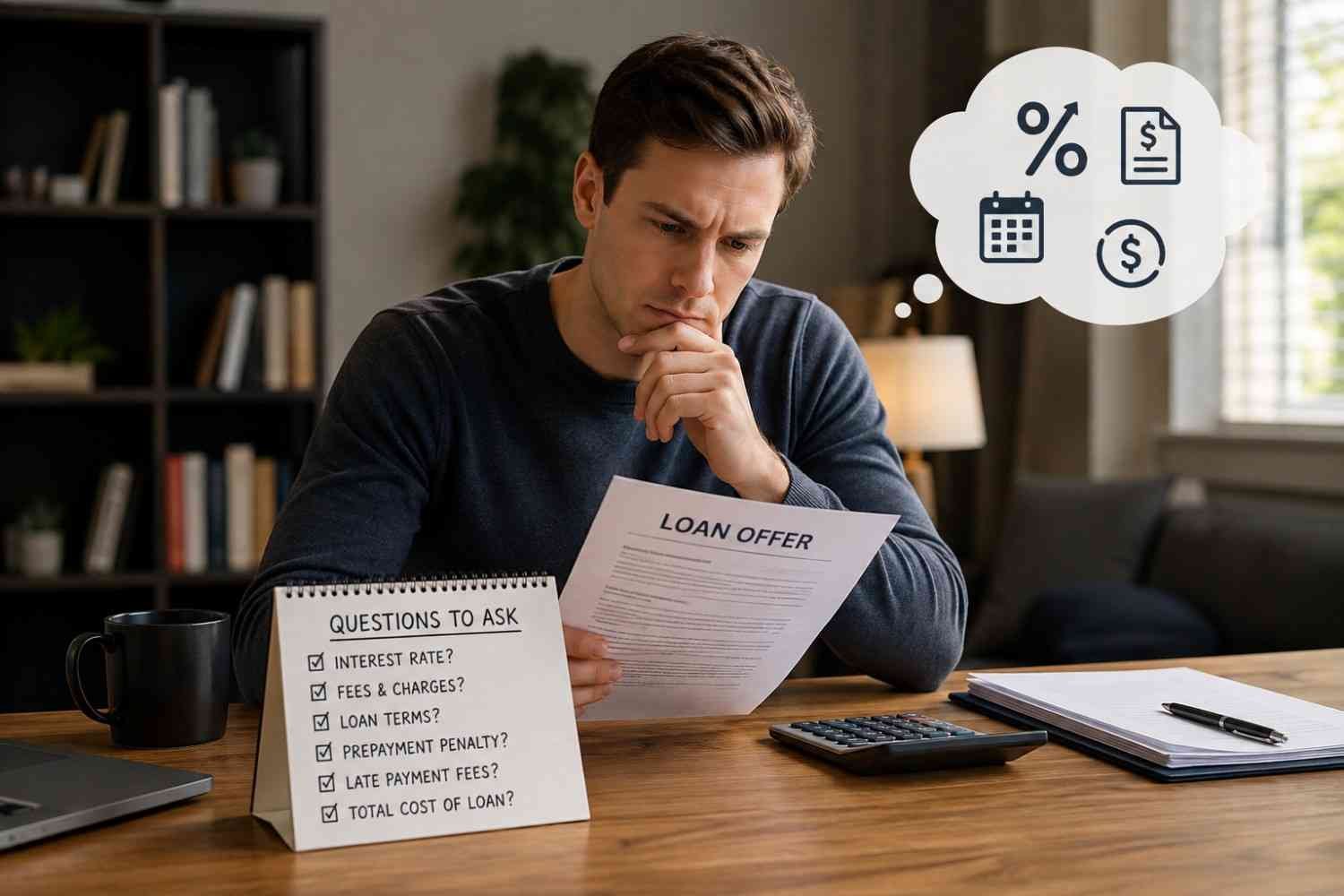
Before accepting the offer, you should be able to answer these questions clearly:
- What is the APR and interest rate?
- How much will I receive after fees?
- What is my exact payment?
- How much will I repay in total?
- What is the loan term?
- Is the rate fixed or variable?
- What fees will I pay?
- Is there a prepayment penalty?
- What happens if I pay late?
- Can I make extra payments toward principal?
- Is autopay required or does it provide a discount?
- Does the final agreement match the original offer?
If the lender cannot clearly answer one of these questions, take the time to understand the missing information before signing.
FAQs: Questions to Ask Before Accepting a Loan Offer and Signing
1. What should I ask before accepting a personal loan?
Ask about the APR, interest rate, monthly payment, total repayment amount, loan term, fees, and penalties. Also confirm how much money you will actually receive.
2. Is APR more important than the interest rate?
APR gives you a broader view because it can include certain mandatory fees. Still, you should review the complete loan cost rather than relying on one number.
3. Should I ask about prepayment penalties?
Yes. If you may pay the loan off early, confirm whether a penalty applies and how additional payments are credited.
4. What should I do if I do not understand the loan agreement?
Ask the lender to explain the unclear terms before signing. Do not accept an agreement you cannot confidently explain back to yourself.
Why the Best Loan Is the One You Understand
A loan can look affordable while still carrying costs or conditions you did not expect. The safest approach is to slow down and examine the entire offer, from the amount you receive to the final payment you make. Monthly affordability matters, but so do the term, APR, fees, repayment rules, and consequences of paying late or early. When those pieces make sense together, you have a much clearer basis for deciding whether the loan belongs in your budget.
A good loan offer should not require guesswork. If you understand exactly what you are accepting, you are in a much stronger position before you put your name on the agreement.