

I used to think comparing online loans meant finding the lowest interest rate and moving on. Once I started looking closer at actual loan offers, I realized the number at the top of the screen rarely tells the whole story. A slightly lower rate can come with an origination fee, a longer repayment period, or terms that do not fit comfortably into a monthly budget.
I also found that a genuinely competitive offer feels balanced. It gives you a reasonable borrowing cost, a payment you can manage, clear terms, and a process that does not make you jump through unnecessary hoops. In 2026, online lenders can compete on much more than rates, so borrowers have more to evaluate before signing anything.
What Makes an Online Loan Offer Competitive?
A competitive online loan offer gives you a strong combination of cost, terms, flexibility, and convenience.
The first thing to check is the annual percentage rate, or APR. Then look at fees, repayment length, monthly payment, total repayment amount, funding speed, and eligibility requirements. An offer can look attractive in one area and become less appealing when you consider the full cost.
The right comparison also depends on your situation. Someone who needs $5,000 for an emergency may value fast funding, while someone consolidating $25,000 of credit card debt may care more about the APR and total interest over several years.
Start With the APR, Not Just the Interest Rate

The interest rate tells you the cost of borrowing the principal. APR gives you a broader view because it can account for the interest rate and certain loan fees. That makes APR a useful starting point when comparing similar offers.
Suppose two lenders offer the same loan amount and repayment term. One advertises a slightly lower interest rate but charges an origination fee. The other has a slightly higher rate with no origination fee. Looking only at the advertised rate could make the first offer appear better.
APR helps bring those costs into the comparison.
Still, do not assume the lowest APR automatically wins. Check the full loan agreement, because the payment amount, repayment term, funding time, and other features may matter to your situation.
Pay Attention to Fees Before Accepting
Fees can change what you actually receive and what you eventually repay.
An origination fee is particularly important because it may be deducted from the loan proceeds before the money reaches your bank account. If you request $15,000 and the lender takes a percentage as an origination fee, you may receive less than $15,000 while still owing according to the loan’s terms.
A competitive offer may have no origination fee, but borrowers should also check for application, late-payment, returned-payment, and other charges. The CFPB recommends reviewing the lender’s disclosures and loan documents so you understand the fees attached to the loan.
Prepayment terms deserve attention too. If you expect to pay the loan off early, check whether doing so could trigger a charge.
Compare the Payment With the Total Cost

A low monthly payment can look appealing, but it does not necessarily mean the loan is inexpensive.
A longer repayment term can spread payments over more months and make each payment smaller. The tradeoff is that you may pay more interest over the life of the loan.
For example, imagine borrowing the same amount at the same rate over three years versus five years. The five-year option may be easier on your monthly budget, but the extra two years can increase the total interest.
That is why a competitive offer should work on both levels. The payment needs to fit your budget without stretching the loan unnecessarily.
Look for Repayment Terms That Fit Your Income
A good loan is one you can repay consistently without constantly rearranging your finances.
Think about when your income arrives, how much of it is already committed, and whether your monthly cash flow changes throughout the year. A payment that looks reasonable on paper can become difficult if your income varies.
This is particularly relevant when how irregular income affects personal loan applications becomes part of the borrowing decision. Lenders may evaluate income and debt differently, and borrowers with variable earnings should pay close attention to both qualification requirements and whether the resulting payment remains comfortable during lower-income periods.
A competitive offer should not simply give you the largest amount you qualify for. It should give you terms that make sense for what you can realistically repay.
Consider How Quickly the Money Arrives
Speed is one of the biggest advantages of online lending.
Some online lenders can fund approved loans the same day or the next business day, although timing depends on approval, verification, the lender, and your bank. Current market comparisons show that same-day and next-day funding are common competitive features among online lenders.
That can matter when you need money for an urgent repair or unexpected expense.
But fast funding should not outweigh an expensive loan. Getting money tomorrow does not help much if the loan creates years of unnecessarily high interest costs.
Think of speed as one part of the offer rather than the main reason to accept it.
Use Prequalification to Compare Your Options
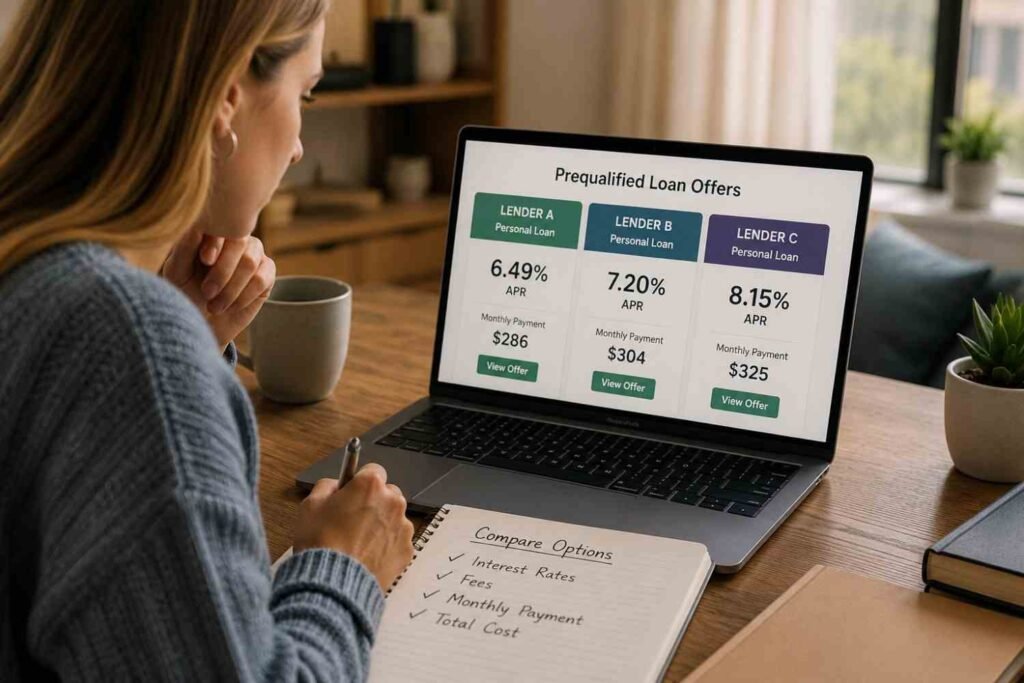
Online prequalification can make comparison easier because many lenders use a soft credit inquiry during the initial process. That generally does not affect your credit score, although the formal application may involve a hard inquiry.
This gives you an opportunity to see potential rates, loan amounts, and repayment terms before committing to a full application.
Prequalification is not a guarantee of approval or final terms. Your final offer can change after the lender verifies your information and completes its underwriting process.
Still, checking multiple potential offers can help you avoid judging the market from one quote.
Look Beyond the Rate for Useful Features
A competitive loan can also stand out through features that make repayment easier.
Some lenders offer an interest-rate discount for enrolling in automatic payments. Others may provide flexible loan amounts, several repayment terms, direct payments to creditors for debt consolidation, or digital account management.
These features only matter if they are useful to you.
For example, an autopay discount can be valuable if you already plan to automate your payments. On the other hand, a slightly lower rate may not compensate for a fee structure or repayment schedule that does not fit your budget.
The same applies to payment flexibility. Understanding changing loan payment dates and due dates can help you evaluate whether the repayment schedule will work with your income cycle and regular expenses.
Check What Happens if You Pay Late

A competitive offer should be clear about what happens when a payment is late.
Read the loan agreement for late fees, returned-payment fees, grace periods, and how missed payments may be reported. Do not assume every online lender handles these situations in the same way.
This matters because a loan can be affordable when everything goes according to plan but become much more expensive after one missed payment.
Before accepting an offer, consider your backup plan as well. If an unexpected expense makes a payment difficult, knowing whom to contact and what options may exist can help you respond before the situation gets worse.
Understanding how late loan payments affect your finances can also put the potential consequences into perspective before you commit to a new monthly obligation.
Compare Offers Side by Side
Once you have several offers, avoid relying on memory. Put the important numbers next to each other.
Look at:
- APR and interest rate
- Origination and other fees
- Loan amount and monthly payment
- Repayment term and total repayment
- Funding timeline
- Prepayment terms
- Available rate discounts
- Eligibility requirements
This makes tradeoffs much easier to see. A loan with a slightly higher APR may still be more suitable if it provides the amount you need, a manageable term, and fewer upfront costs. Conversely, a convenient loan with fast funding may not be competitive if the total borrowing cost is significantly higher.
Current consumer-finance research also shows why shopping around matters. Recent data found meaningful differences between personal-loan offers for the same type of borrower, meaning the first offer you see may not be the strongest one available.
Why the Best Offer Is the One That Fits
A competitive online loan offer is not simply the one with the lowest number in an advertisement. It is the offer that gives you a reasonable borrowing cost while matching your income, repayment ability, timing, and financial priorities. Looking at APR, fees, total repayment, payment flexibility, and funding speed together gives you a much clearer picture of what you are actually agreeing to.
Take a few extra minutes before accepting. Compare the real numbers, read the terms, and make sure the payment still makes sense after the excitement of getting approved wears off. A loan should solve a financial need without creating a new one.
FAQs: What Makes an Online Loan Offer Competitive in 2026?
1. Is a low APR the most important factor?
It is one of the most important, but not the only one. Fees, repayment term, monthly payment, and total cost also affect whether an offer is competitive.
2. Are no-fee personal loans always better?
Not necessarily. A loan with no origination fee can be attractive, but compare the APR and total repayment amount before deciding.
3. Does prequalification hurt your credit?
Usually, prequalification uses a soft credit inquiry that does not affect your score. A formal application may involve a hard inquiry.
4. How many online loan offers should I compare?
There is no fixed number. Comparing several offers can help you identify meaningful differences in rates, fees, terms, and funding speed before choosing one.