

A check signed on the back without a single added restriction becomes a “bearer instrument.” That means if you drop it on the sidewalk, anyone who picks it up can legally cash it. Knowing how to endorse a check properly isn’t just about getting your money fast—it is your first line of defense against fraud and lost funds.
Why Check Endorsement Rules Still Exist
Paper checks might feel like artifacts from a bygone era, but billions of them still travel through the U.S. financial system every year. According to payment system data tracked by the Federal Reserve System, check fraud attempts skyrocketed over recent years, prompting financial institutions to strictly enforce Uniform Commercial Code rules.
When you sign the back of a check, you execute a legal transfer of ownership. By endorsing it, you authorize your financial institution to collect funds from the issuer’s account on your behalf. Skipping this step or scribbling outside the designated lines delays processing and can trigger immediate rejections from automated banking systems.
Understanding these mechanics forms an essential foundation for basic money management. Once you get comfortable handling paper instruments, you can start building broader healthy money habits—like figuring out how much should you save from each paycheck to keep your financial goals on track.
The 3 Primary Ways to Endorse a Check
Depending on how you intend to deposit or transfer your money, you will choose one of three common endorsement types.
| Endorsement Type | What You Write | Best Used For | Risk Level |
| Blank | Your signature only | In-person bank teller deposits | High (acts like cash if lost) |
| Restrictive | “For Deposit Only” + Account # + Signature | Mobile deposits or mail deposits | Very Low (secured to your account) |
| Third-Party | “Pay to the order of [Name]” + Signature | Transferring funds to someone else | High (requires bank approval) |
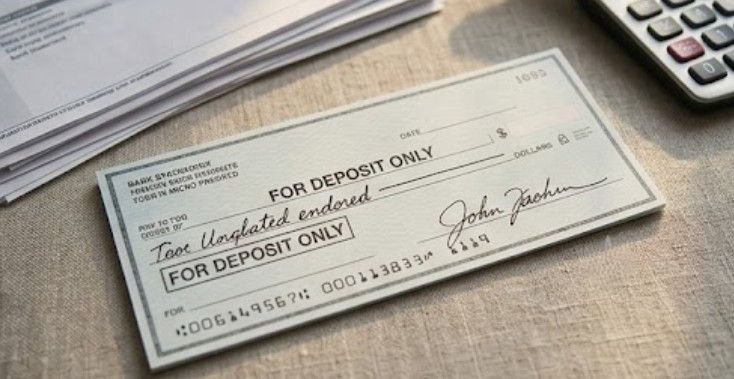 1. Blank Endorsement
A blank endorsement requires only your signature on the back line. While it is the easiest method, it offers zero protection. Anyone holding the check can demand funds. Only use this method if you are already standing directly in front of a teller or an ATM.
2. Restrictive Endorsement
This is the safest method available. Writing “For Deposit Only to Account #123456789” directly above your signature prevents anyone else from cashing the check if it leaves your hands.
If you use smartphone banking apps, federal banking regulations mandate adding “For Mobile Deposit Only” beneath your endorsement line. Many modern check formats now include a checkbox specifically for mobile processing—be sure to check that box and add the phrase manually if it is missing.
3. Third-Party Endorsement
Also known as “signing a check over,” this allows you to transfer your check to another individual. Write “Pay to the order of [Recipient’s Full Name]” directly above your signature line.
Important Caution: Always contact the recipient’s bank beforehand. Due to identity theft risks, many financial institutions explicitly reject third-party check deposits.
Trickier Situations: Misspellings, Joint Payees, and Errors
Not every check arrives with pristine formatting. Handling edge cases correctly prevents frustrating bank delays.

- Misspelled Names: If your name is misspelled on the front payee line, sign the back with the incorrect spelling first. Immediately underneath, write your correct legal signature.
- Multiple Payees with “And”: If a check is made out to “Jane Doe AND John Doe,” both individuals must endorse the back before the bank accepts the deposit.
- Multiple Payees with “Or”: If it lists “Jane Doe OR John Doe,” either party can endorse and deposit the check independently.
- FBO (For Benefit Of): Common in trust distributions or insurance payments, these require the legal custodian or trustee to sign on behalf of the designated beneficiary.
Step-by-Step: The Bulletproof Endorsement Checklist
Follow this checklist to guarantee your deposit clears smoothly on the first try.
- Verify the Front First: Check that the written dollar amount matches the numerical box, the date is valid (checks typically expire after 180 days), and the issuer signed the front line.
- Use Blue or Black Ink: Scanners use infrared light to read endorsement zones. Colored ink, pencils, or gel pens can render your signature invisible to digital clearing systems.
- Locate the 1.5-Inch Endorsement Zone: Flip the check over. Keep your signature and text strictly inside the designated box at the top end. Do not write in the area marked “Do Not Write, Stamp, or Sign Below This Line.”
- Match the Payee Name Exactly: Write your signature exactly as it appears on the front payee line, even if it includes your middle initial or a slight variation.
- Add Your Account Number: For extra security, write your full bank account number underneath your signature to ensure funds route directly to your account.
When Advice Doesn’t Apply: Common Exceptions
While standard endorsement practices work 95% of the time, key exceptions exist:

- Business Accounts: Checks written to an LLC or corporation generally cannot be cashed—they must be deposited into a business bank account using an official business endorsement stamp or authorized signature.
- Government and Tax Checks: U.S. Treasury checks feature ultra-sensitive fraud detection rules. They require clean, clear signatures and strict verification, especially when double-endorsed or processed via mobile apps. For comprehensive rules on federal payment instruments, check guidelines directly on the U.S. Department of the Treasury resources hub.
- ATM Limits: Some financial institutions enforce lower dollar limits on mobile or ATM deposits for newly established accounts. If you hold a high-value check, processing it in person with a teller avoids temporary account holds.
Mastering these basic administrative tasks helps build strong financial confidence overall. As your financial foundation grows, you can easily shift your focus toward evaluating other core money tools—such as learning how to read a credit card statement or deciding whether should you close an unused credit card when streamlining your accounts.
Frequently Asked Questions
1. How to legally endorse a check to someone else?
Write “Pay to the order of [New Recipient’s Name]” directly above your signature on the back. Check with the recipient’s bank first, as many financial institutions do not accept third-party checks due to fraud risks.
2. Is endorsing a check just signing it?
Not always. While a blank endorsement is just your signature, adding restrictive text like “For Deposit Only” or “For Mobile Deposit Only” protects your money from being cashed by someone else if the check is lost.
3. Can I deposit someone else’s check into my account if they endorse it?
Only if your bank accepts third-party checks. The original recipient must write “Pay to the order of [Your Name]” and sign it. Both individuals may need to show ID at the bank teller window.
4. When endorsing a check, does it have to be cursive?
No, cursive is not legally required. Your signature can be printed or written in cursive, provided it matches your official legal signature on file and is clearly legible in dark blue or black ink.
Understanding how to endorse a check gives you complete control over your money while locking out potential fraud. By choosing the right endorsement type, keeping your signatures inside the lines, and using restrictive phrasing like “For Deposit Only,” you ensure your hard-earned funds arrive safely in your account every single time.