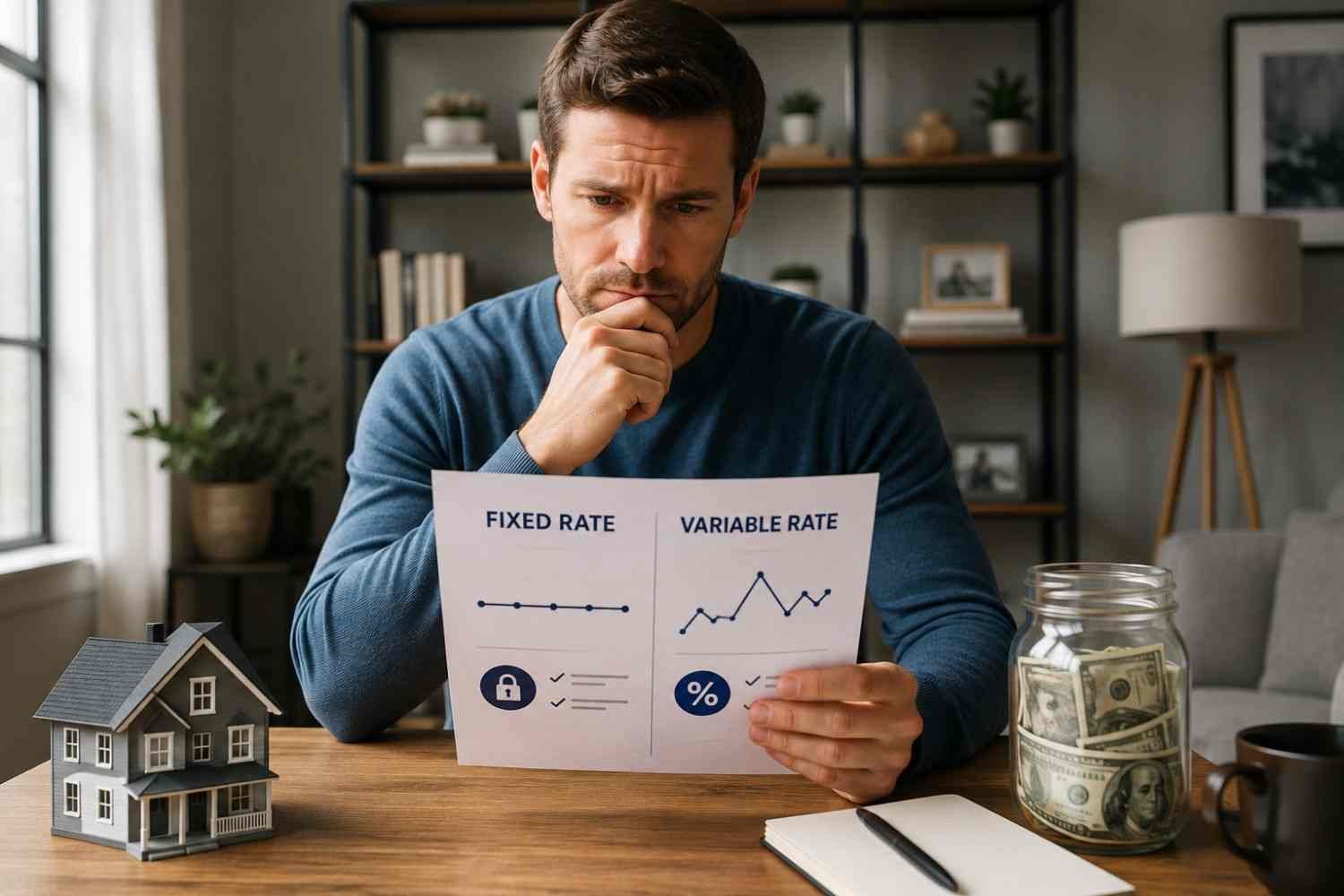

When I look at loan offers, the interest rate is usually the first number that catches my attention. It is easy to compare 8% with 10% and assume the lower number wins. But I have found that the rate only tells part of the story. Fees, repayment terms, and penalties can quietly change what the loan actually costs, especially when the balance stays around for several years.
I also think the monthly payment can create the same blind spot. A payment that fits comfortably into a budget can still come with a much higher total repayment than expected. The better question is not just, “Can I afford this payment?” It is, “How much will this borrowing really cost me from the first dollar received to the last dollar repaid?”
Why the Interest Rate Is Only Part of the Cost
A loan’s interest rate tells you what the lender charges for the money you borrow, but it does not necessarily capture every cost attached to the agreement. Depending on the loan, you may also encounter origination charges, application fees, documentation costs, late fees, or other expenses.
That is why APR deserves attention. The annual percentage rate is designed to give borrowers a broader measure of borrowing cost than the interest rate alone. Loan disclosures can also show fees and other charges that affect what you ultimately pay.
A useful comparison is to look at the interest rate, APR, amount you receive, monthly payment, and total repayment together. One number rarely tells the whole story.
Origination Fees Can Reduce What You Actually Receive
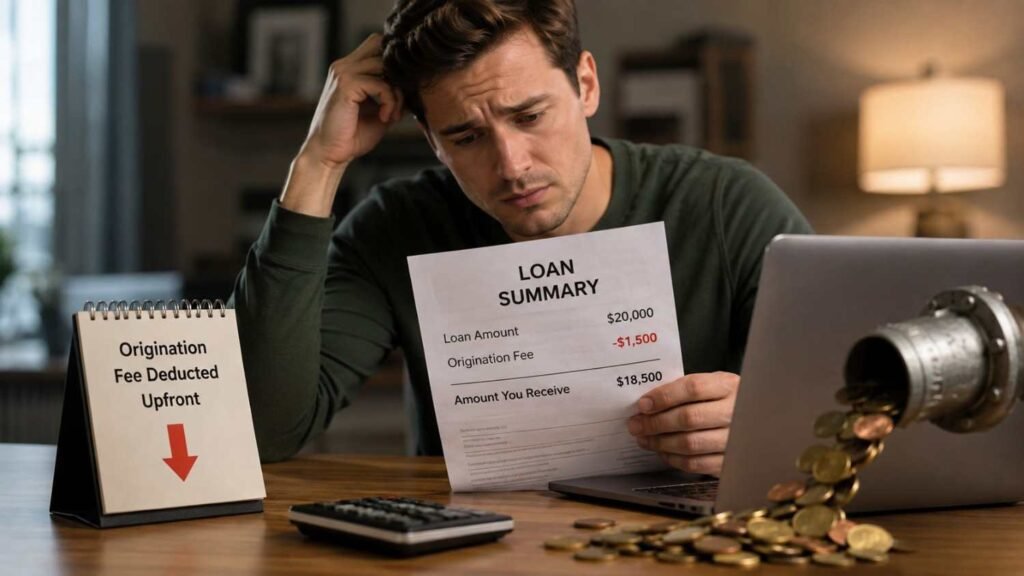
An origination fee is often charged as a percentage of the amount borrowed. It may cover activities such as processing the application, preparing documents, or checking credit information.
For example, suppose you are approved for a $10,000 personal loan with a 3% origination fee. If the $300 fee is deducted before the funds reach your bank account, you may receive $9,700 while the loan is still structured around the agreed principal and repayment terms.
That difference matters. You should compare the cash you actually receive with the amount you are required to repay.
Before signing, questions to ask before accepting a loan offer should include whether the origination fee is deducted upfront, added to the balance, or handled another way. Also ask whether any other processing or documentation charges apply.
Application and Administrative Fees Can Add Another Layer
Some lenders may charge an application fee, while others may include administrative, documentation, or processing costs. These charges can be easy to overlook when the main focus is getting approved.
A small fee may not change your decision by itself. Several small fees can be different.
Check whether the quoted origination fee already covers credit checks, underwriting, document preparation, or processing. If separate charges appear for similar services, ask exactly what each one pays for. Current consumer guidance specifically recommends reviewing loan disclosures and documents for these additional charges before accepting an offer.
The same principle applies to how the lender sends your money. Certain products or payment methods can carry transfer or processing charges, so it is worth checking the fee schedule rather than assuming every transaction is free.
A Longer Loan Term Can Increase the Real Cost
A longer repayment term can make a loan feel more affordable because it spreads payments over more months. That can be useful when cash flow is tight, but there is a trade-off.
If you take longer to repay the same principal, interest has more time to accumulate. A lower monthly payment does not automatically mean a cheaper loan.
Consider two offers with similar rates but different repayment periods. The longer option may have a more comfortable monthly payment, yet you could pay considerably more interest over the life of the loan.
This is where understanding how personal loan interest is calculated becomes useful. Knowing how interest applies to the outstanding balance helps you see why the repayment period matters. It also makes it easier to compare a loan based on total cost rather than choosing whichever payment looks smallest.
Late Fees Can Become More Than a One-Time Charge

Missing a payment can create a cost that was never part of your original budget. Depending on the loan agreement, a late payment may trigger a fee, and a returned payment can create another charge.
The situation can become more expensive if an automatic payment fails because there is not enough money in your bank account. The lender may charge a returned-payment fee, while your financial institution may also impose an NSF or overdraft fee depending on the circumstances and applicable rules.
A missed payment can also create consequences beyond the fee itself. Personal loan payments that become significantly delinquent may be reported to credit bureaus, potentially affecting future borrowing.
Setting up payments carefully and knowing the exact due date can help prevent an avoidable expense.
Prepayment Penalties Can Affect Early Payoff
Paying a loan off early sounds like an obvious way to save interest, but some loan agreements may include a prepayment penalty.
The fee can be structured in different ways, including a flat charge, a percentage of the remaining balance, or an interest-based calculation. Not every personal loan includes one, which makes checking the specific agreement important.
Imagine you receive a bonus and want to eliminate your remaining balance. If an early-payoff charge applies, part of the interest savings could be offset by the fee.
That does not automatically make the loan a bad choice. It simply means you should understand the payoff terms before assuming early repayment will always produce the savings you expect.
Optional Products Can Increase What You Pay
Some loans may come with optional products such as credit insurance or payment-protection coverage. These products may have a cost of their own, so do not assume that every item presented with a loan is required.
Ask whether each product is mandatory and how much it adds to your payment or total borrowing cost. Consumer guidance identifies certain insurance products as generally optional on personal installment loans.
The same approach works for other add-ons. If you do not understand what a charge provides, ask before agreeing to it.
Watch for Terms That Change the Cost

The fine print can contain more than a list of fees. It can explain when fees apply, how payments are processed, what happens after a missed payment, and whether the interest rate can change.
For personal loans, a penalty APR is generally not common, unlike with credit cards, but late payments can still result in fees and other consequences.
This is why borrowers should avoid assuming that every type of loan uses the same rules. Read the actual agreement you are being offered.
Compare Total Cost, Not Just the Monthly Payment
When comparing two loans, put the offers side by side.
Look at the APR, upfront fees, amount you actually receive, monthly payment, repayment term, total amount repaid, late-payment charges, and prepayment rules. This gives you a much clearer picture than comparing interest rates alone.
A loan with a slightly higher rate but no origination fee could potentially cost less than a lower-rate loan with substantial upfront charges. The answer depends on the specific numbers and term, which is why the total borrowing cost matters more than any single advertised feature.
The distinction between loan interest vs loan fees explained can also make comparisons much easier. Interest is the cost of borrowing the principal over time, while fees can be charged for specific services, events, or conditions. Both affect what comes out of your pocket.
Read the Disclosure Before You Accept
Before accepting a loan, take a few minutes to find every number that affects the cost. Check how much money will actually reach you, what you will pay each month, how long payments will continue, and what the total repayment will be.
Then look specifically for fees that only appear under certain circumstances. Ask about late payments, returned payments, early payoff, optional insurance, and any charges that are not immediately clear.
If a lender cannot clearly explain a fee or term, that is a reason to slow down rather than sign quickly.
FAQs: Hidden Costs That Can Make Loans Expensive in the Long Run
1. What is the highest hidden cost of a loan?
There is no single fee that is always the biggest. Origination charges, long repayment terms, and penalties can all increase borrowing costs depending on the loan.
2. Does APR include loan fees?
APR can incorporate certain finance charges and upfront costs, but not every possible future fee. Review the loan disclosure to understand what is included and excluded.
3. Can a loan have fees without a high interest rate?
Yes. A loan can have a competitive interest rate while still charging origination, application, late-payment, or other fees.
4. Is a longer loan term always more expensive?
Not necessarily in every situation, but a longer term generally gives interest more time to accumulate. Compare the total repayment amount before choosing based on monthly payment alone.
Why the Cheapest-Looking Loan Is Not Always the Cheapest
Borrowing costs rarely come down to one number. A low rate can look attractive, but an origination fee, long repayment period, optional add-on, or early-payoff charge can change the economics of the offer. The safest approach is to look at the entire agreement and calculate what you will receive, what you will pay each month, and what you will repay altogether.
A loan should fit your budget, but it should also make sense on paper. Understanding the smaller costs before you sign can prevent those costs from becoming expensive surprises later.